Which sensor fits your room?
Eight models, grouped by what they detect. Jump to setup details and the exact linked pack; these are source-based choices, not hands-on rankings.
Thread needs a compatible Matter controller and Thread border router. Measurements and automations vary by platform. Pack labels describe the linked US offers; confirm accessories and shipped firmware.
01 / Before you buy
Start with what you want to know.
A contact sensor cannot tell whether someone is sitting still. A motion sensor cannot tell whether a door is locked. Match the sensing method to your routine before comparing brands.
Choose what to detect
Motion, open/closed contact, room occupancy and water leaks are different signals. Start with the event your automation actually needs.
Plan the power
Battery sensors offer more placement freedom. The MS600 needs continuous USB power. Check the specified battery type, cable reach and included adapter.
Check your platform
Thread sensors need a compatible Thread border router and Matter controller. Wi-Fi sensors follow your platform’s Matter requirements. Available sensor functions can vary by app.
02 / Find your fit
Four uses. Four different fits.
Compare the signal, power and connection. These recommendations draw on manufacturer documentation and matching retailer listings; we have not performed hands-on reliability testing.
Motion · battery-powered Thread
Eve Motion
A motion and light sensor for movement-triggered routines, such as lighting a hallway. Choose it for motion detection rather than a promise to detect someone sitting still.
- Detects
- Motion and light level
- Power
- 2 × AAA batteries
- Connection
- Matter over Thread
- Linked offer
- Amazon: Eve Motion (Matter) · 3-pack
What you need
- A compatible Matter controller and Thread border router. App support for light-level automations and advanced settings varies.
- Position within the specified detection area. IPX3 splash resistance is not waterproofing; follow the manufacturer’s placement guidance.
Check before choosing
The linked Amazon offer is a three-pack. It is a motion sensor, not a guarantee that an occupied room will always register as occupied.
Amazon: Eve Motion (Matter) · 3-pack
Amazon
Confirm model, pack, included accessories and current terms at the retailer.
Product details →Open / closed · battery-powered Thread
Aqara Door & Window Sensor P2
A contact sensor for detecting whether a door or window is open. The sensor and magnet mount on separate surfaces; check their alignment before choosing a location.
- Detects
- Open / closed contact
- Power
- 1 × CR123A battery
- Connection
- Matter over Thread
- Linked offer
- Amazon: DW-S02E · 1 sensor set
What you need
- A compatible Matter controller and Thread border router are required. An Aqara-branded hub is not a universal requirement.
- Check the mounting gap and the operating environment in the manual. Use the specified CR123A battery.
Check before choosing
Open/closed detection does not establish that a door is locked or a room is occupied. Do not assume weatherproof outdoor or mailbox use.
Amazon: DW-S02E · 1 sensor set
Amazon
Confirm model, pack, included accessories and current terms at the retailer.
Product details →
Room occupancy · powered Wi-Fi
Meross MS600
Combines PIR motion sensing, 24 GHz radar and a light sensor for occupancy-based routines. It needs continuous USB power, so plan the sensor and cable position together.
- Detects
- Presence and light level
- Power
- USB-C · 5 V / 1 A
- Connection
- Matter over 2.4 GHz Wi-Fi
- Linked offer
- Amazon: MS600 · 1 sensor
What you need
- A 2.4 GHz Wi-Fi network and your platform’s Matter controller requirements. A Thread border router is not needed for this Wi-Fi sensor.
- Indoor placement with continuous power. The Meross store kit lists a power adapter and 1.5 m cable; select the US/CA version for that region. Check Amazon’s included accessories separately.
Check before choosing
Radar sensing is not a guarantee against missed or unwanted detections. Placement, sensitivity and platform automation support matter; do not treat this as a safety or security system.
Amazon: MS600 · 1 sensor
Amazon
Meross
Confirm model, pack, included accessories and current terms at the retailer.
Product details →Water leaks · battery-powered Wi-Fi
Shelly Flood Gen4
A leak detector with a sensing cable for areas around appliances or plumbing. This is Flood Gen4 (S4SN-0071A), distinct from Flood S Gen4.
- Detects
- Water at the sensing cable
- Power
- 4 × AA batteries
- Connection
- Matter over Wi-Fi
- Linked offer
- Amazon: 1 detector + 6.56 ft / 2 m cable
What you need
- A compatible Matter setup. Matter uses Wi-Fi; Zigbee requires switching firmware modes.
- Place the cable where water can reach it. The manufacturer specifies a five-second cable check interval; Economic mode disables the buzzer.
Check before choosing
IP44 does not mean submersible. A leak alert does not shut off water by itself. Choose a separate supported temperature sensor if you need freeze monitoring.
Amazon: 1 detector + 6.56 ft / 2 m cable
Amazon
Shelly US
Confirm model, pack, included accessories and current terms at the retailer.
Product details →Other models considered
Three more models from the original guide serve related needs. Keep their model, network and regional details separate.
Eve Door & Window
A Matter-over-Thread contact sensor for open/closed detection. The linked Amazon US offer is a white three-pack; keep it separate from single-sensor prices.
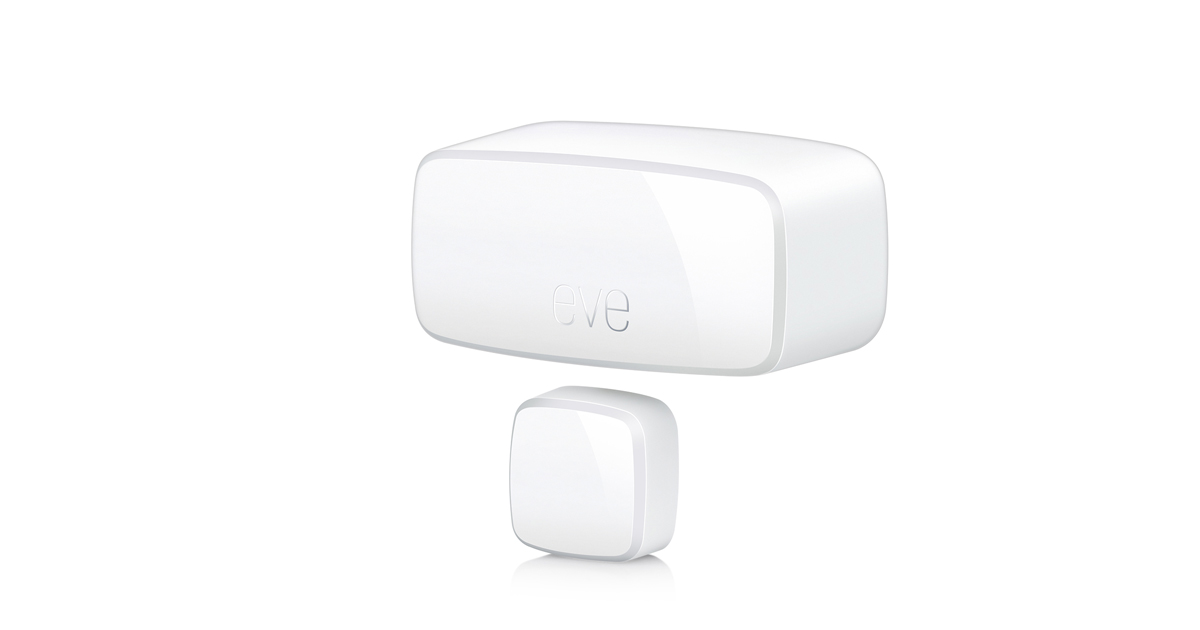
Amazon US · White · 3-pack
Pack and model match the Amazon listing.
- What you need
- A compatible Matter controller and Thread border router; one ½ AA ER14250 3.6 V battery per sensor. Check sensor/magnet alignment.
- Check the Matter version
- Amazon lists model 20EBN9901 and part 10EBN9901-3X. The same model also appears on older upgradeable units. Confirm the Matter version and shipped firmware with the seller.
- Confirm the accessories
- The three-pack is verified; Amazon’s accessory quantities are not. Confirm included batteries before buying.
Check platform features
Eve lists Apple Home, SmartThings, Alexa and Google Home support. Automations and notifications depend on your platform; Eve time and duration history uses the iOS Eve app through Apple Home.
Eve model and generation guide ↗CSA’s model listing names 20EBN9901; software 3.2.1 has its own certificate. This does not establish firmware shipped in the three-pack.
See Amazon three-packIKEA MYGGBETT
An indoor Matter-over-Thread contact sensor. US article 606.176.41 is one sensor set with magnet. IKEA recommends one AAA / HR03 1.2 V rechargeable battery, sold separately. Matter smart-home use needs a compatible Matter controller and Thread border router; DIRIGERA is one option. Separate direct pairing with compatible IKEA smart products can work without a smart system. Features vary by platform.
IKEA setup manual · pages 4–5 ↗US article 606.176.41 · 1 sensor set
Check price at IKEA USDirect non-affiliate link. Battery sold separately; check local availability at IKEA.
SONOFF AirGuard SAWF-07P
An indoor air-quality monitor for a different need: PM2.5, PM10, temperature and humidity. It uses native Matter over Wi-Fi and 5 V / 1 A USB-C power. Advanced history and alarms use eWeLink; check which measurements your Matter app exposes.

SAWF-07P · 1 monitor
Model and single pack match the Amazon US listing.
Plan for continuous 5 V / 1 A USB-C power, 2.4 GHz Wi-Fi and a compatible Matter controller. SONOFF’s standard box shows a USB-A–USB-C cable and guide; the USB-A power adapter is separate. Amazon lists only the monitor, so confirm accessories with the seller.
Check Matter-platform limits
Over Matter, SONOFF lists Alexa air-quality levels rather than numeric PM readings, and no humidity reading. These limits do not describe every eWeLink integration.
SONOFF says Apple Home humidity needs iOS 26 or later. SONOFF’s documents differ on Apple Home temperature support; verify that reading before choosing.
History and configurable alerts use eWeLink. Verify the measurements and automations you need in your Matter app.
SONOFF platform table ↗CSA’s model listing names SAWF-07P; its certificate covers software v1.0. This does not establish firmware shipped with a retail unit.
See Amazon option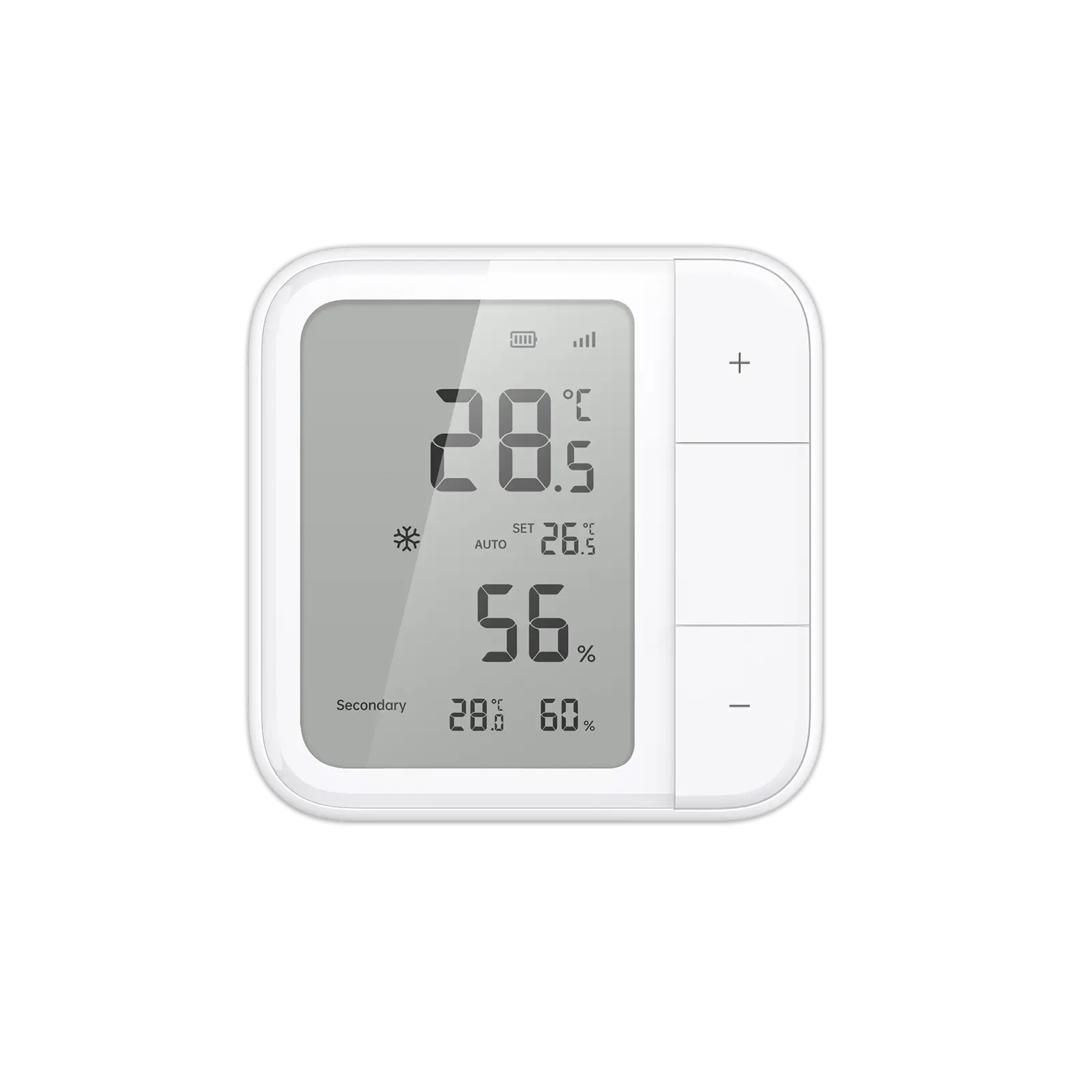
Temperature & humidity
Aqara Climate Sensor W100
An indoor temperature and humidity sensor with an LCD and three buttons. Choose it for room readings; button functions and available automations vary by platform and setup.
- Connection
- Matter over Thread; separate Zigbee mode
- Linked offer
- Amazon US · 1 W100 sensor
What you need
Matter over Thread requires a compatible Matter controller and Thread border router. Separate Zigbee mode requires a compatible Aqara hub and Aqara Home. The sensor needs two 3 V CR2450 batteries.
Check the pack
The linked US offer is one sensor, with a desktop stand listed. We could not confirm the included batteries, wall bracket, retail TH-S04E/TH-S04D suffix or shipped firmware. Confirm these with the seller.
03 / Every model we list
Matter motion, presence and door sensors sold in the US
Every motion, presence and door or window sensor in the catalog with a verified US store link and a CSA certification record, certified models first. Each row repeats what the product page states. Open a model for its store links and current price.
Matter motion sensors
MatterCatalog lists 6 motion sensors with a verified US store link; 4 are CSA Matter certified: Aqara Motion and Light Sensor P2, Eve Motion (Matter), Eve Motion (matter) 3-pack – Smart Motion And Light Sensor and IKEA MYGGSPRAY wrlss mtn sensor. This guide’s pick: Eve Motion.
- Aqara Motion and Light Sensor P2Matter certified: Yes, Nov 3, 2022Thread, Bluetooth · Platforms: Apple Home, Amazon Alexa, Google Home and Samsung SmartThings
- Eve Motion (Matter)Matter certified: Yes, Jun 7, 2023Thread · Platforms: Apple Home, Amazon Alexa, Google Home and Samsung SmartThings
- Eve Motion (matter) 3-pack – Smart Motion And Light SensorMatter certified: Yes, Jun 7, 2023Thread, Bluetooth · Platforms: Apple Home, Amazon Alexa, Google Home and Samsung SmartThings
- IKEA MYGGSPRAY wrlss mtn sensorMatter certified: Yes, Jun 5, 2025Thread, Bluetooth · Platforms: Apple Home, Amazon Alexa, Google Home and Samsung SmartThings (listed in its catalog record, unverified)
2 more listings claim Matter support with no CSA certificate on file, so they are not in the table.
Matter presence sensors
MatterCatalog lists 8 presence sensors with a verified US store link; 5 are CSA Matter certified: Aqara Presence Multi-Sensor FP300, Lafaer Wireless Human Presence Sensor LWR01, Meross MS600, Meross Smart Presence Sensor MS605 and Shelly Presence Gen4. This guide’s pick: Meross MS600.
- Aqara Presence Multi-Sensor FP300Matter certified: Yes, Apr 29, 2026Thread · Platforms: Apple Home, Amazon Alexa, Google Home and Samsung SmartThings
- Lafaer Wireless Human Presence Sensor LWR01Matter certified: Yes, Apr 15, 2025Thread · Platforms: Apple Home, Amazon Alexa and Google Home (listed in its catalog record, unverified)
- Meross MS600Matter certified: Yes, Apr 17, 2024Wi-Fi · Platforms: None listed
- Meross Smart Presence Sensor MS605Matter certified: Yes, Sep 29, 2025Thread · Platforms: None listed
- Shelly Presence Gen4Matter certified: Yes, Nov 18, 2025Wi-Fi · Platforms: Amazon Alexa, Google Home and Samsung SmartThings (named by the maker); Apple Home (listed in its catalog record, unverified)
- Lafaer All-in-One Wireless Presence Sensor (LWR02)Matter certified: CSA record on file; retail variant unverifiedThread, Bluetooth · Platforms: None listed
2 more listings claim Matter support with no CSA certificate on file, so they are not in the table.
Matter door and window sensors
MatterCatalog lists 8 door and window sensors with a verified US store link; 3 are CSA Matter certified: Arre Contact Sensor, Eve Door & Window (Matter) and Eve Door & Window Smart Contact Sensor. This guide’s picks: Aqara Door & Window P2, Eve Door & Window and IKEA MYGGBETT.
- Arre Contact SensorMatter certified: Yes, Jul 31, 2023Thread, Bluetooth · Platforms: None listed
- Eve Door & Window (Matter)Matter certified: Yes, Jun 7, 2023Thread · Platforms: Apple Home, Amazon Alexa, Google Home and Samsung SmartThings
- Eve Door & Window Smart Contact SensorMatter certified: Yes, Jun 7, 2023Thread, Bluetooth · Platforms: None listed
- Aqara Door & Window Sensor P2Matter certified: CSA record on file; retail variant unverifiedThread · Platforms: None listed
- IKEA MYGGBETT Door/Window SensorMatter certified: CSA record on file; retail variant unverifiedThread · Platforms: None listed
3 more listings claim Matter support with no CSA certificate on file, so they are not in the table.
04 / More sensor types
Matter temperature, leak, smoke and air-quality sensors sold in the US
Every temperature and humidity sensor, water leak sensor, smoke or CO sensor and air-quality monitor in the catalog with a verified US store link and a CSA certification record, certified models first. A model is in a table when its own name says what it measures. Each row repeats what the product page states. Open a model for its store links and current price.
Matter temperature and humidity sensors
MatterCatalog lists 10 temperature and humidity sensors with a verified US store link; 4 are CSA Matter certified: arre Temperature Sensor, Eve Weather, IKEA TIMMERFLOTTE temp/hmd sensor and Qingping Temp & RH Monitor T. 1 more has a CSA record that we could not match to the exact retail model. Matter network of the 5 models in the table: 0 Wi-Fi, 5 Thread.
- arre Temperature SensorMatter certified: Yes, Oct 13, 2023Thread, Bluetooth · Platforms: Apple Home, Amazon Alexa, Google Home and Samsung SmartThings
- Eve WeatherMatter certified: Yes, Apr 1, 2025Thread · Platforms: Apple Home and Amazon Alexa (named by the maker); Google Home (listed in its catalog record, unverified)
- IKEA TIMMERFLOTTE temp/hmd sensorMatter certified: YesThread · Platforms: None listed
- Qingping Temp & RH Monitor TMatter certified: Yes, Jul 23, 2026Thread, Bluetooth · Platforms: Apple Home (listed in its catalog record, unverified)
- Aqara Climate Sensor W100Matter certified: CSA record on file; retail variant unverifiedThread, Zigbee · Platforms: None listed
5 more listings have no CSA certificate on file, so they are not in the table.
Matter water leak sensors
MatterCatalog lists 4 water leak sensors with a verified US store link; 3 are CSA Matter certified: Shelly Flood Gen4, Shelly Flood S Gen4 and THIRDREALITY Smart WaterLeak KM1. 1 more has a CSA record that we could not match to the exact retail model. Matter network of the 4 models in the table: 3 Wi-Fi, 1 Thread.
- Shelly Flood Gen4Matter certified: Yes, Jun 30, 2025Wi-Fi, Zigbee · Platforms: None listed
- Shelly Flood S Gen4Matter certified: Yes, Jun 30, 2025Wi-Fi, Bluetooth · Platforms: None listed
- THIRDREALITY Smart WaterLeak KM1Matter certified: Yes, Nov 3, 2025Wi-Fi · Platforms: None listed
- IKEA KLIPPBOK water leak sensorMatter certified: CSA record on file; retail variant unverifiedThread · Platforms: None listed
Matter smoke and CO sensors
MatterCatalog lists 5 smoke and CO sensors with a verified US store link; 4 are CSA Matter certified: HEIMAN S1-M Smart Smoke Sensor, HEIMAN S1-TM Smart Smoke Sensor with Temperature & Humidity, Heiman smart CO sensor and Owl Wired Smoke & CO Alarm. Matter network of the 4 models in the table: 1 Wi-Fi, 3 Thread.
- HEIMAN S1-M Smart Smoke SensorMatter certified: YesThread · Platforms: None listed
- HEIMAN S1-TM Smart Smoke Sensor with Temperature & HumidityMatter certified: YesThread · Platforms: Apple Home, Amazon Alexa and Google Home (listed in its catalog record, unverified)
- Heiman smart CO sensorMatter certified: Yes, Nov 6, 2023Thread, Bluetooth · Platforms: Apple Home, Amazon Alexa, Google Home and Samsung SmartThings (listed in its catalog record, unverified)
- Owl Wired Smoke & CO AlarmMatter certified: Yes, Aug 7, 2026Wi-Fi, Bluetooth · Platforms: None listed
1 more listing has no CSA certificate on file, so it is not in the table.
Matter air-quality monitors
MatterCatalog lists 3 air-quality monitors with a verified US store link; 3 are CSA Matter certified: IKEA ALPSTUGA air quality monitor, SONOFF AirGuard SAWF-07P and uHoo Caeli Air Quality Monitor. Matter network of the 3 models in the table: 2 Wi-Fi, 1 Thread.
- IKEA ALPSTUGA air quality monitorMatter certified: YesThread, Bluetooth · Platforms: None listed
- SONOFF AirGuard SAWF-07PMatter certified: Yes, Aug 5, 2025Wi-Fi · Platforms: None listed
- uHoo Caeli Air Quality MonitorMatter certified: Yes, Jul 28, 2026Wi-Fi, Bluetooth · Platforms: None listed
Matter smart sensor FAQ
What is a Matter sensor?
A Matter sensor, such as a motion, door and window, presence, leak, temperature or air-quality sensor, can report to a Matter platform such as Apple Home, Google Home, Amazon Alexa or SmartThings; which readings each app shows varies. A sensor that uses Thread also needs a Thread border router in the home; a Wi-Fi sensor joins your Wi-Fi network.
What is the difference between motion and presence sensing?
A motion sensor detects movement; a presence sensor may combine radar and other inputs to detect smaller movements. Neither guarantees perfect occupancy detection. Choose the sensing method for your routine and check placement and sensitivity in the manufacturer instructions.
Which sensors need a Thread border router?
Eve Motion, Aqara Door and Window Sensor P2, Eve Door & Window and IKEA MYGGBETT use Matter over Thread and need a compatible Matter controller and Thread border router. Aqara W100 needs both in Thread mode; its separate Zigbee mode uses a compatible Aqara hub. Meross MS600, Shelly Flood Gen4 and SONOFF AirGuard SAWF-07P use Wi-Fi for Matter and do not need a Thread border router. Follow your chosen platform’s controller requirements.
Can I use any battery or power adapter?
No. Eve Motion specifies two AAA batteries; Aqara P2 uses a CR123A; Shelly Flood Gen4 uses four AA batteries. Meross MS600 needs continuous 5 V / 1 A USB-C power. Aqara W100 requires two CR2450 batteries; check whether the linked pack includes them. Verify the exact model, included accessories and regional power adapter before buying.
Will every sensor feature appear in every Matter app?
No. Basic sensor support, available automations, advanced settings and history vary by platform, firmware and manufacturer app. Check the features you need in the manufacturer’s current compatibility information before purchase.
Does a leak sensor prevent water damage?
It can provide an alert when water reaches its sensing area, but cannot guarantee damage prevention. Shelly Flood Gen4 checks its cable at five-second intervals and has selectable alarm modes. Automatic shutoff needs separate compatible hardware and an appropriate automation.
Which Matter presence sensors are certified?
MatterCatalog lists 8 presence sensors with a verified US store link; 5 are CSA Matter certified: Aqara Presence Multi-Sensor FP300, Lafaer Wireless Human Presence Sensor LWR01, Meross MS600, Meross Smart Presence Sensor MS605 and Shelly Presence Gen4. This guide’s pick: Meross MS600.
Which Matter door and window sensors are certified?
MatterCatalog lists 8 door and window sensors with a verified US store link; 3 are CSA Matter certified: Arre Contact Sensor, Eve Door & Window (Matter) and Eve Door & Window Smart Contact Sensor. This guide’s picks: Aqara Door & Window P2, Eve Door & Window and IKEA MYGGBETT.
Which Matter temperature and humidity sensors are certified?
MatterCatalog lists 10 temperature and humidity sensors with a verified US store link; 4 are CSA Matter certified: arre Temperature Sensor, Eve Weather, IKEA TIMMERFLOTTE temp/hmd sensor and Qingping Temp & RH Monitor T. 1 more has a CSA record that we could not match to the exact retail model.
How we checked
We reviewed manufacturer specifications and manuals and matched the four linked US Amazon listings to the models and packs shown here on September 16, 2026. We matched the Meross and Shelly store options to the same models and regional requirements. The P2 certification scope was clarified on September 17, 2026. The exact IKEA US MYGGBETT article and direct non-affiliate destination were checked on September 18, 2026. Its manual covers two hardware types, so we can’t say which one the certificate covers. On September 18, 2026 we also checked that the SONOFF SAWF-07P Amazon US listing is a single monitor, along with SONOFF’s package and platform notes and the model’s software certificate; Amazon accessories and delivered firmware remain unverified. The Eve Door & Window Amazon US three-pack, model 20EBN9901 and software certification history were checked on September 18, 2026; shipped firmware and Amazon accessory quantities remain unverified. On September 19, 2026, we added the eight-model chooser and W100 guidance, based on our September 18, 2026 checks of the W100 Amazon US single-sensor listing, manufacturer image and named certification; the other listings keep the check dates above. W100 retail suffix, accessories noted above and shipped firmware remain unverified. On October 5, 2026, we added the motion, presence and door sensor tables; each row repeats the catalog record’s product page, and the counts update with the catalog. On October 6, 2026, we added the temperature and humidity, water leak, smoke and CO, and air-quality tables, built the same way. Retailer pages can change; confirm the model and pack before buying. This is not a lab test or an exhaustive ranking.
This guide uses “Check price” links instead of unverified prices, stock or discount claims. A consumer model, regional version, multipack and CSA certification record are different things; a similar name does not make them interchangeable. Read our editorial policy.